Offline and Protected: Why Hollywood's Biggest Stars Are Keeping Their Kids Far Away From the Internet
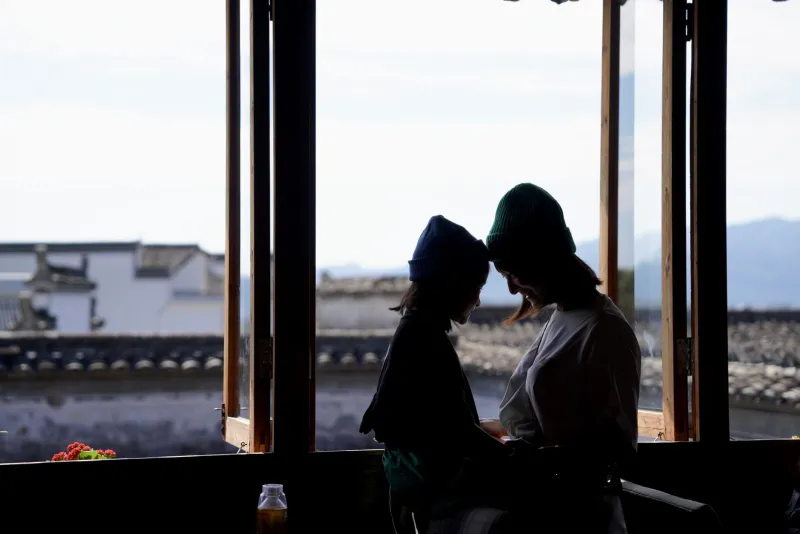
There's a particular kind of irony in watching someone with 40 million Instagram followers post a carefully curated photo of their morning coffee, their designer kitchen, and their view from a Malibu deck — and then absolutely nothing about their kids. No birthday posts. No first-day-of-school snapshots. No adorable holiday card content. Just a conspicuous, deliberate silence where the family content used to be.
This isn't an accident. It's a choice. And it's one that a growing number of Hollywood's biggest names are making with increasing conviction.
The Shift That's Been Building for Years
For a long time, celebrity kids were content. That sounds harsh, but it's accurate. The early days of celebrity Instagram culture were full of it — famous parents sharing every milestone, every vacation, every gap-toothed smile, with captions that racked up millions of likes. Fans loved it. Brands paid for it. And the kids? Well, they didn't exactly have a say.
But somewhere around the late 2010s and into the 2020s, something shifted. A combination of factors — growing awareness of online predators, the documented mental health crisis among young social media users, and a few high-profile cautionary tales about what happens to children who grow up in the public eye — started changing how celebrity parents thought about sharing their children online.
Now, the trend has accelerated to the point where keeping your kids offline has become its own kind of statement. A values statement. A parenting philosophy. And in some cases, a form of quiet activism.
What the Celebrities Are Actually Saying
Some of the most candid conversations about this shift have come directly from the celebrities themselves, often in interviews where they're clearly thinking through the ethics in real time.
The throughline in most of these conversations is consent. These parents — many of whom built careers on public exposure — have come to a point where they're deeply uncomfortable making visibility decisions on behalf of someone who can't meaningfully agree to them.
The logic is straightforward: a toddler cannot consent to having their face, their name, and their daily life broadcast to millions of strangers. And once that information is out there, it doesn't come back. The internet archives everything. The implications of that — for safety, for the child's future sense of identity, for their ability to define themselves on their own terms — are serious.
Several celebrities have also spoken about the parasocial intensity that comes with public children. When fans feel like they know a celebrity's kid — have watched them grow up, have opinions about their personality — it creates a kind of ownership dynamic that can become genuinely threatening. Stalker incidents involving celebrity children, while not always widely reported, are more common than most people realize.
What Child Psychologists Are Seeing
The mental health research community has been increasingly vocal about the risks of what's sometimes called "sharenting" — the practice of parents oversharing their children's lives on social media — and the data isn't particularly comforting.
Dr. Patricia Nguyen, a child psychologist based in Los Angeles who works with families navigating public life, explained the core concern this way: "Children have a developmental need to form their own identity, separate from how their parents see them and present them. When a child grows up with a public persona that was constructed for them — before they were old enough to have preferences, opinions, or the ability to opt out — it can create a complicated internal conflict as they get older."
That conflict can manifest in a range of ways, from identity confusion to anxiety to resentment toward the parent who made the sharing decisions. Dr. Nguyen also noted that children who have been heavily featured on parental social media accounts sometimes struggle with the experience of suddenly not being the subject of public attention as they age out of the "cute kid" phase that drove engagement.
"There's also the question of permanence," she added. "These children will grow into adults who can Google themselves and find years of content they had no say in creating. How that lands emotionally varies enormously from person to person, but it's a variable that didn't exist for previous generations, and we're only beginning to understand its long-term effects."
The Legal Landscape Is Starting to Catch Up
Beyond individual parenting choices, there's a growing legislative movement around child privacy online that has gained real momentum — and celebrity advocacy has played a role in pushing it forward.
California, which tends to lead on tech-adjacent legislation, has been at the center of several efforts to extend financial and privacy protections to children who appear in their parents' social media content. The conversation has drawn comparisons to the Coogan Law, the landmark 1939 legislation that protected child actors' earnings after Jackie Coogan (yes, Uncle Fester himself) famously lost his childhood fortune to his parents.
The argument being made by advocates is essentially the same: if a child's image, likeness, and personal milestones are generating income or significant platform growth for a parent, that child deserves some form of protection and eventual agency over that content.
Several high-profile celebrities have lent their voices to these efforts, using their platforms — somewhat ironically — to argue for the right of children to exist off platforms.
The Counterargument: Is Some Sharing Okay?
It would be too simple to say that any sharing is bad sharing. Child development experts are generally careful to distinguish between the occasional family photo shared with a private account and the systematic, monetized documentation of a child's entire life for public consumption.
"Context and scale matter enormously," Dr. Nguyen told us. "A grandparent sharing a birthday photo in a private group is a fundamentally different act than a parent with millions of followers building a content strategy around their child's daily existence. The power dynamics, the audience size, and the commercial implications are completely different."
There's also a cultural dimension to consider. In some communities, family celebration and public sharing are deeply intertwined, and the idea of keeping children completely invisible online doesn't align with how those families understand community and connection. The conversation around celebrity privacy choices has to leave room for that nuance rather than defaulting to a one-size-fits-all prescription.
What This Moment Actually Means
When the most visible people in American culture start making deliberate choices to keep their children invisible, it's worth paying attention to what that signals.
It suggests a growing awareness — hard-won, in many cases — that the attention economy has real costs, and that the most vulnerable people in a celebrity household are the ones who never signed up for any of it. It reflects a broader cultural reckoning with what we've normalized in the age of social media: the idea that every moment of family life is potential content, that children are assets in a personal brand strategy, that visibility is inherently good.
More and more, Hollywood parents are pushing back on all of that. Not loudly, not always consistently, but meaningfully.
And maybe the most powerful thing about that choice is exactly what makes it so hard to write about: there are no photos to run with the story.